Kataban Blog
Akihabara's Chuo-dori Retro Row: The Essential First Walk for Overseas Collectors
Why the Chuo-dori Retro Row
If you only have one afternoon in Akihabara, this is the walk. Four of the city's most legendary retro game shops sit almost in a straight line along Chuo-dori, Akihabara's main strip — no side streets, no getting lost, just one direction and four stops.
The Route
From Akihabara Station's Electric Town Exit, head north on Chuo-dori. Super Potato is the first stop, about 5 minutes up — look for the mascot out front. Continue another 5 minutes to Mandarake Complex, then it's just 2 minutes further to Trader, and 2 more minutes north to Retro Game Camp near Suehirocho. The whole walk is under 20 minutes of pure movement, easily a half-day with browsing.
Store-by-Store Notes
-
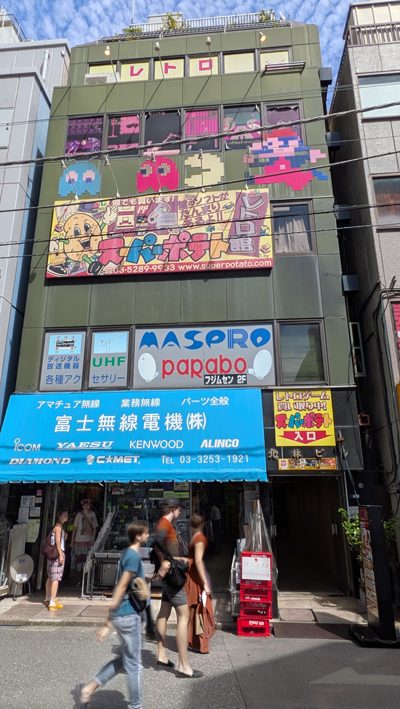 Super Potato (3F–5F) — Akihabara's most famous retro shop. Floors 3–4 are wall-to-wall Famicom-through-PlayStation-era software and hardware; 5F has a working retro arcade with snacks.
 -
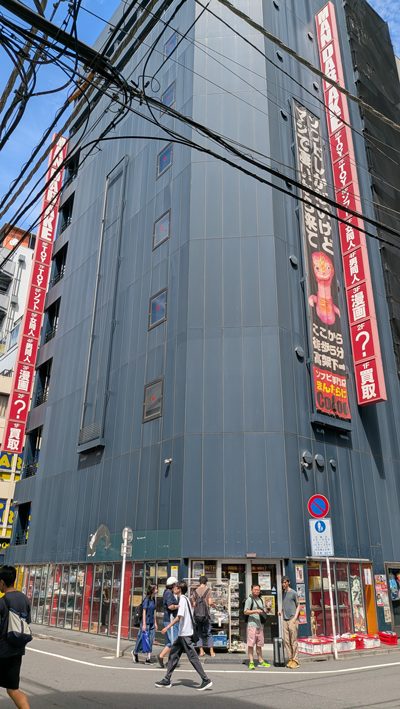 Mandarake Complex (game floor: 6F) — Part of an 8-floor subculture department store; take the elevator straight to 6 to skip the toy and figure floors below.
 -
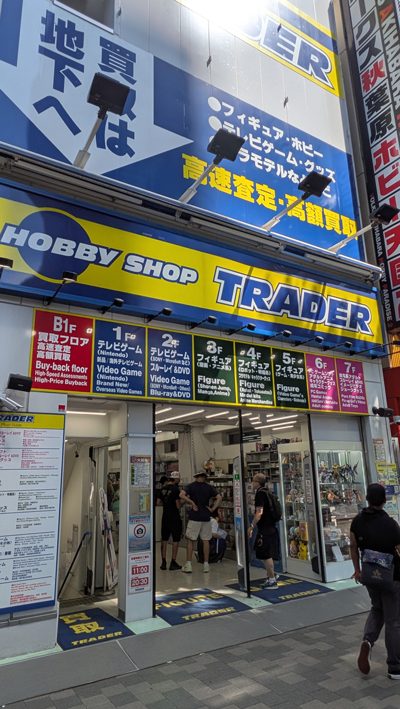 Trader (B1–7F) — moved across the street in 2024, so look for the new building. 1F is mostly Nintendo hardware and software; 2F covers non-Nintendo consoles plus DVDs and Blu-rays.
 -
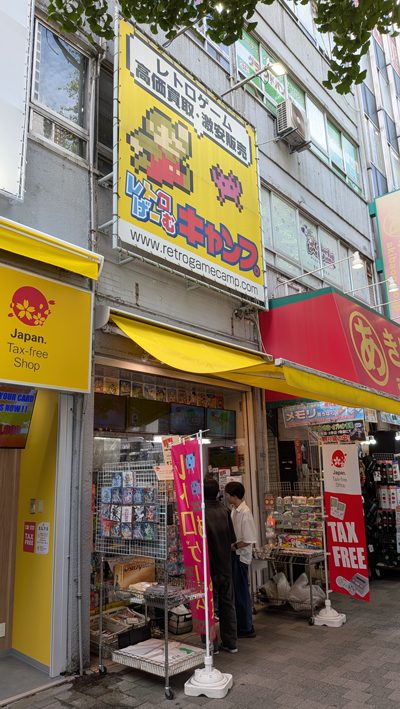 Retro Game Camp — Nintendo-hardware specialists: 1F is Famicom and Super Famicom, 2F is Sega and other systems. Smaller store, but deep stock.
Open this route in Google Maps
No Japanese? No Problem
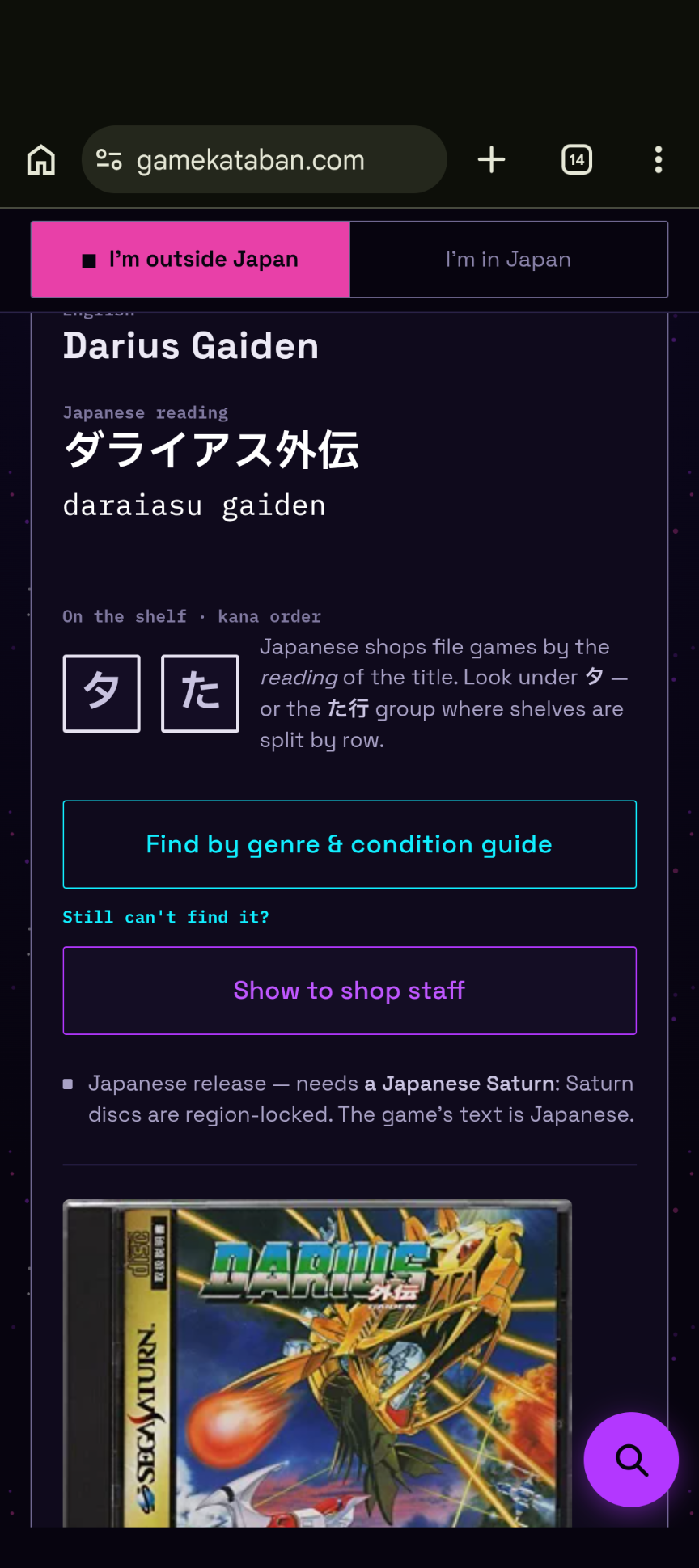
Cartridge shelves here are enormous, and none of them have barcodes worth scanning — for Famicom, Super Famicom, and most cartridge-era hardware, type the product code (型番) into Kataban instead; it's printed right on the cartridge label. If you're browsing PlayStation, Saturn, or Dreamcast discs, the barcode on the box works fine. Either way you get the English title back instantly, so you can confirm you've found the right game before you queue up.
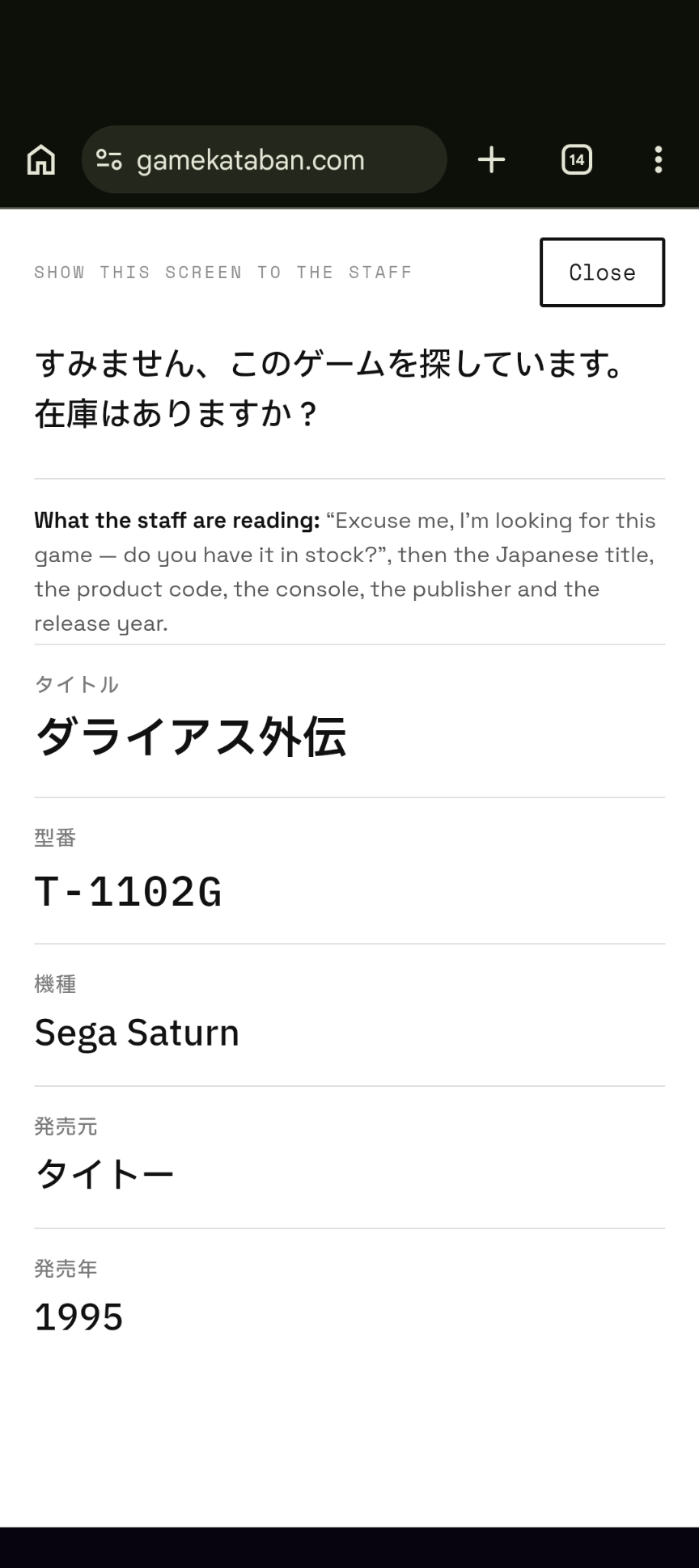
Can't find it on the shelf? Ask a staff member.
Don't give up if a title isn't where you expect it. Type the name into Kataban and tap
Show to shop staff — it displays the Japanese title, product code, and a
ready-made question in Japanese. A staff member will take it from there.
Practical Tips
Most shops here open around 11am and close by 8pm. Super Potato and Mandarake Complex get busy on weekend afternoons — weekday mornings are calmer for actually digging through bins. Cash is safest for the smaller specialist shops; the bigger ones take cards.
Before You Go
This is the row to check first if you're hunting anything mainstream — Famicom and Super Famicom classics especially. Look up your want-list on Kataban before you head out and note the product codes; on Chuo-dori's packed shelves, knowing the exact code saves real time.